


- Tips for tourists
- Tips for tour guides
- Crafting non-traditional excursions
- Children's tour
- Culture and History tour
- Scuba diving & snorkeling tour
- Eco and Wildlife tour
- Excursion
- Fishing tour
- Gourmet & Cooking tour
- Hiking/Trekking/Cycling tour
- Jeep tour
- Local private tour
- African safari
- Shopping tour
- Sightseeing tours and excursions
- Walking tour
- Wine tasting tour
- Railway trip
- Photo tour
- Bird watching tours
- Shore excursion in the port city
- Adventure tour
- Arts and Crafts tour
- Religious tour
- The FIRST WAVE℠ promo
Articles
Adventure tour

The Aral Sea is one of the most unusual places in Central Asia. It is a quiet, wide land where the sea once was. Today, visitors come here to see a landscape very different from that of other parts of 🇺🇿 Uzbekistan. Many people describe their visit as a serious and thoughtful experience. The land is dry, the air is clear, and the silence is strong. The Aral Sea region is not a typical tourist destination, but it is a place that helps visitors understand history, nature, and human decisions in a very direct way.
This article explains how to visit the Aral Sea, what to expect, how to prepare, and why local tour guides in Nukus (the best city to start from) can arrange this journey safely and meaningfully.

Did you ever know what "choncance" means?
It sounds a bit familiar but unknown... Puzzled? Curious? Yes, right now we will explain the meaning and even give you a perfect itinerary to put this word's meaning into practice during your next vacation, so you can tell your colleagues and friends: "Please, do not bother me next 10 days as I am going for choncance." And it does not mean Elon prepared a space jet for you to send you to another galaxy. It means you are going to 🇰🇷 South Korea, particularly to take a tour of rural Korea, which remains enigmatic, though the trend of 2026 shows it is becoming the most trendy destination!
So leave the neon of Seoul behind; we are going to escape urban stress, explore the countryside, and seek authentic, slower-paced alternatives...

If Guatemala is the Maya world at full power, then the rest of Central America is the Maya world in quiet mode — subtle, scattered, half-hidden under jungle blankets and volcanic ash.
These sites aren’t ignored because they're unimportant. They’re ignored because they refuse to make noise.
But beneath the vines, behind the hills, and under layers of soil lie pyramids that shaped trade routes, hosted royal rituals, and carried the intellectual signatures of one of the world’s most sophisticated civilizations.
This chapter is the final piece of the "RECORDS IN STONE" puzzle article series, and we will explore:
Belize, Honduras, and El Salvador — the Maya world’s overlooked southern constellation.

Today, we continue our 7-article series RECORDS IN STONES, and we're already over halfway through.
If Egypt gives us geometry, Sudan gives us long, pointed, four-ribbed cones, China gives us silence, Mexico gives us theater, and Cambodia gives us mythology. Guatemala provides us with the jungle pyramids — tall, vertical monuments rising above a sea of green like stone signal towers.
This territory is the Classic Maya heartland, the intellectual and architectural peak of the Maya world.
Here, pyramids aren’t simply structures; they’re declarations of power, astronomy, dynasty, and the ability to control space in three dimensions.
Guatemala isn’t the footnote of Maya architecture.
It’s the capital.

If Egypt built pyramids to immortalize kings, and Mexico built pyramids to perform cosmic theater, then Cambodia built pyramids to retell the universe.
Except here, they’re not called pyramids.
The Khmer Empire built temple-mountains — colossal, multi-tiered symbolic recreations of Mount Meru, the cosmic axis where gods live, worlds intersect, and kings legitimize their power.
They function like pyramids, speak like pyramids, and rise like pyramids… but they wear the architectural mask of temples.
Cambodia didn’t follow the pyramid blueprint. It rewrote it.

To dive into the next part of an article series, "Records in Stone", we will cross the oceans, change continents, and time zones. Yes, the following stop is in North America, and precisely - in Mexico!
If Egypt built pyramids to impress eternity and China built them to quietly outlast it, then Mexico built pyramids to perform. They are not tombs. They are not monuments to dead kings. They are event machines: cosmic calendars, ritual stages, astronomical observatories, echo chambers, and geometric invitations for the gods to make dramatic entrances.
Mexico is not a pyramid culture. It is a constellation of them. Different civilizations, different centuries, different intentions. But they all agreed on one thing: if you want to speak to the heavens, build a pyramid.
This chapter of the "Records in Stone" article series focuses on two giants:
- Teotihuacan, the mysterious megacity near Mexico City, and
- Chichén Itzá, the Maya’s masterpiece of astronomical precision.

If the Egyptian pyramids are the loud celebrities of ancient architecture, the Chinese pyramids are the introverts — brilliant, massive, unmistakably important… and doing everything possible to avoid eye contact.
China has dozens of pyramidal mausoleums, most of them disguised under soil, trees, and carefully maintained government silence.
If China’s pyramids are imperial mausoleums in camouflage, then you will need Local tour guides in Xi’an and Shaanxi to decode layouts, alignments, and access rules because:
- They’re real.
- They’re huge.
- Almost nobody outside China talks about them (but we DO).
Let’s fix that.

- Sudan has over 200+ pyramids, compared to Egypt’s ~120.
- Most people have never heard of the Kingdom of Kush or the Meroitic civilization, even though they lasted 1,000+ years.
- Sudanese pyramids are smaller, steeper, and built in densely clustered groups.
- Sudan is not a “side note” to Egypt — it was a rival, a successor, and at times, a conqueror.
Kushite pharaohs once ruled Egypt as the 25th Dynasty (the “Black Pharaohs”).
The ancient city of Meroë was called the “Manhattan of the Desert” by early explorers because pyramids stood everywhere.

Let’s start with the obvious: everyone thinks they “know” the Pyramids of Giza. They’ve seen the desktop wallpaper, they’ve seen the magnets, they’ve seen Hollywood’s “slaves dragging stones under the whip” template that refuses to die.
But the Pyramids of Giza are one of those rare monuments that get less understood the more people talk about them. The truth is stranger, funnier, more technical, and far more human than any myth could make it.
If you’re ready to ditch clichés, here is the first article in the “Records in Stone” series: the Giza edition, where the world’s most overexposed monument suddenly becomes fresh again.

Humanity keeps repeating two rituals. One is noble: building monuments that reach for the divine. The other is pathetic: shrinking those monuments into sterile triangles.
Different civilizations, different continents, different religions — yet the same geometric instinct appears again and again. Sometimes as a tomb. Sometimes as a temple. Sometimes, it is a calendar, or a political stage, or a cosmological diagram carved into stone.
The result is a global conversation written across millennia. This series deciphers that conversation.
Most people think “pyramids” means Egypt and stop there, as if the rest of humanity spent millennia building mud huts and playing chess. Meanwhile, pyramids quietly appeared on almost every continent: in jungles, deserts, mountains, rice fields, kingdoms you’ve never heard of, and empires that evaporated before anyone wrote their name down.
This series is not about repeating what every bored guidebook already said. It’s about the oddities, the engineering madness, the coincidences, the human stories, and the moments when ancient architects clearly decided to defy common sense just for the fun of it.
From Giza to Sudan, from China to Mexico, from Cambodia to the forgotten corners of Central America, the series of articles, "Records in Stone — A World Tour of Ancient Pyramids", follows the same question:
How did so many civilizations invent the same shape despite being thousands of kilometers and centuries apart?
Spoiler: No, it wasn’t aliens. But the real explanations are far weirder, far more human, and far more satisfying.
Welcome to “Records in Stone” - a new article series on the PRIVATE GUIDE WORLD platform. The flight will not be safe, so unfasten your brain.
Attention!
Get yourself ready!?
Start!

Angkor Wat may be Cambodia’s crown jewel, but its stones whisper more than history — they echo the rhythms of a living culture. This article invites you to go beyond the monument’s grandeur and into the shadows, where Khmer traditions still thrive.
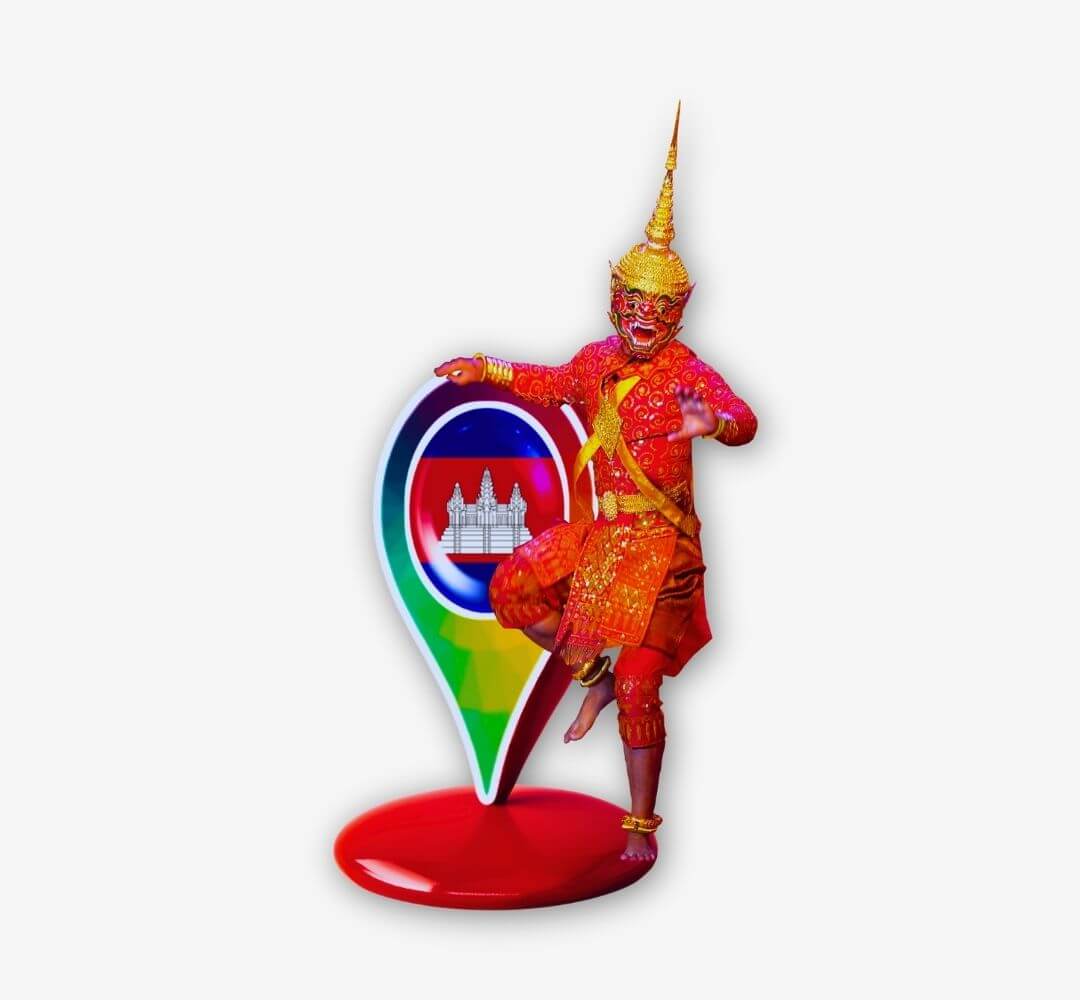
From ceremonial clothing and spiritual rituals to street food and etiquette, we delve into the vibrant customs that shape modern Cambodian life. Guided by locals who carry these traditions forward, this is not just a tour — it’s a journey of discovery, revealing identity, resilience, and culture in the depths of the soul.

21 Bizarre and Extreme Rituals That Shock, Scare, and Inspire
Travel is often sold as postcard perfection — sunsets, beaches, and smiling faces. But beyond the glossy brochures lies another world: one where faith, fear, and festivity collide. Across the globe, communities preserve rituals so intense, so surreal, and sometimes so unsettling that they defy easy explanation. These are not staged shows for tourists — they are living traditions, sacred acts, and cultural explosions that reveal the deepest parts of the human spirit. In this article, we step into the shadows — and sometimes into the mud, fire, or frenzy — to witness the world’s wildest cultural rituals. Prepare to feel awe, suspense, and maybe even a little fear, as we travel beyond the ordinary.
Our selection of the most impressive 21 wild cultural rituals we are going to suggest for your choice includes:
- The El Colacho “Baby Jumping” Festival (Spain).
- The Monkey Buffet Festival (Thailand).
- The Kanamara Matsuri “Penis Festival” (Japan).
- Tinku “Ritual Fighting” Festival (Bolivia).
- The Mursi Tribe's Lip Plates (Ethiopia).
- The Thaipusam Festival (Malaysia, Singapore, India).
- The Kukeri Festival (Bulgaria).
- The bullet ant initiation ritual of the Sateré-Mawé people (Brazil).
- Vanuatu Land Diving (Vanuatu).
- Scarification Rituals (West Africa).
- Día de los Muertos “Day of the Dead” (Mexico City).
- Ganga Aarti and Cremation Rituals (Varanasi, India).
- Animal Sacrifice in Shrines (Nepal).
- Fire Dance Rituals (Bali, Indonesia).
- African Ecstatic Dances (Africa).
- Famadihana “Turning the Bones” Ritual (Madagascar).
- Shamanic Fire Ceremonies, including deer antler bath (Siberia).
- The Kapparo Atonement Ritual (Jewish Communities Worldwide).
- Cooper's Hill Cheese-Rolling and Wake (Gloucestershire, England).
- Boryeong Mud Festival (South Korea).
- Holi, “The Festival of Colors” (India and Nepal).
Let's go!